For a keychain or bag charm collection, the important buying decision is often the role of each part. A resin miniature might sit inside a clear case; a clay slice might supply a small repeating motif. Neither becomes a ready-to-hang charm simply because it appears in a keychain concept. HAIBU supplies craft materials through its existing resin, polymer clay, slime and sequin categories. Use this guide to prepare the decoration portion of your project and list any assembly or finished-product requirement separately for review.
Compare four real decoration references
Each card opens its own product and inquiry. These are separate components, not an assembled kit.
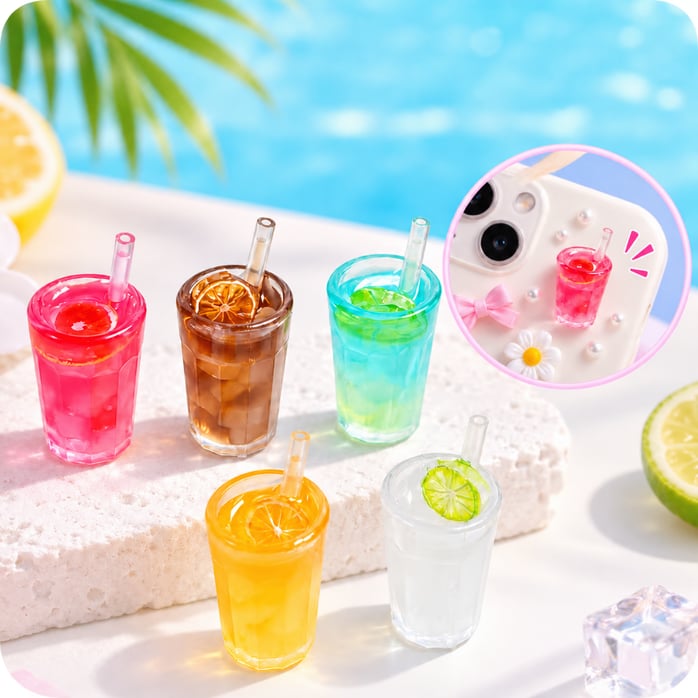
RW26795 · Mini summer drink decorations
- Material
- resin
- Listed size
- 12 × 26 mm
- Reference pack
- 100 pieces per bag; custom packing by inquiry
The source lists no hole. Review as an enclosed or fixed decoration; no hanging attachment or finished keychain is included.
View RW26795 details →
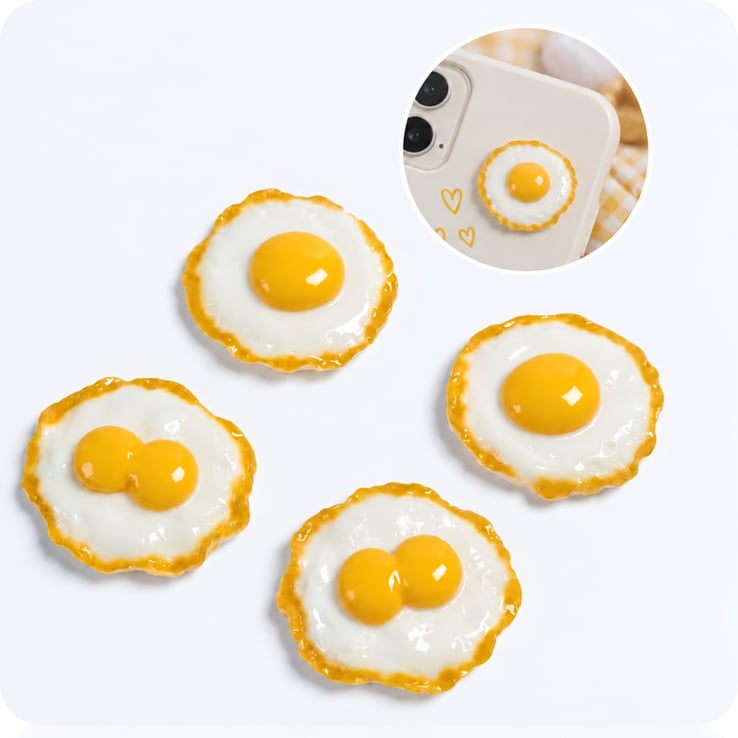
RW26801 · Mini fried egg cabochons
- Material
- resin
- Listed size
- Approximately 25 mm
- Reference pack
- 100 pieces per bag; custom packing by inquiry
The source lists no hole. Confirm the reverse side, contact area and fixing method for your base before ordering.
View RW26801 details →
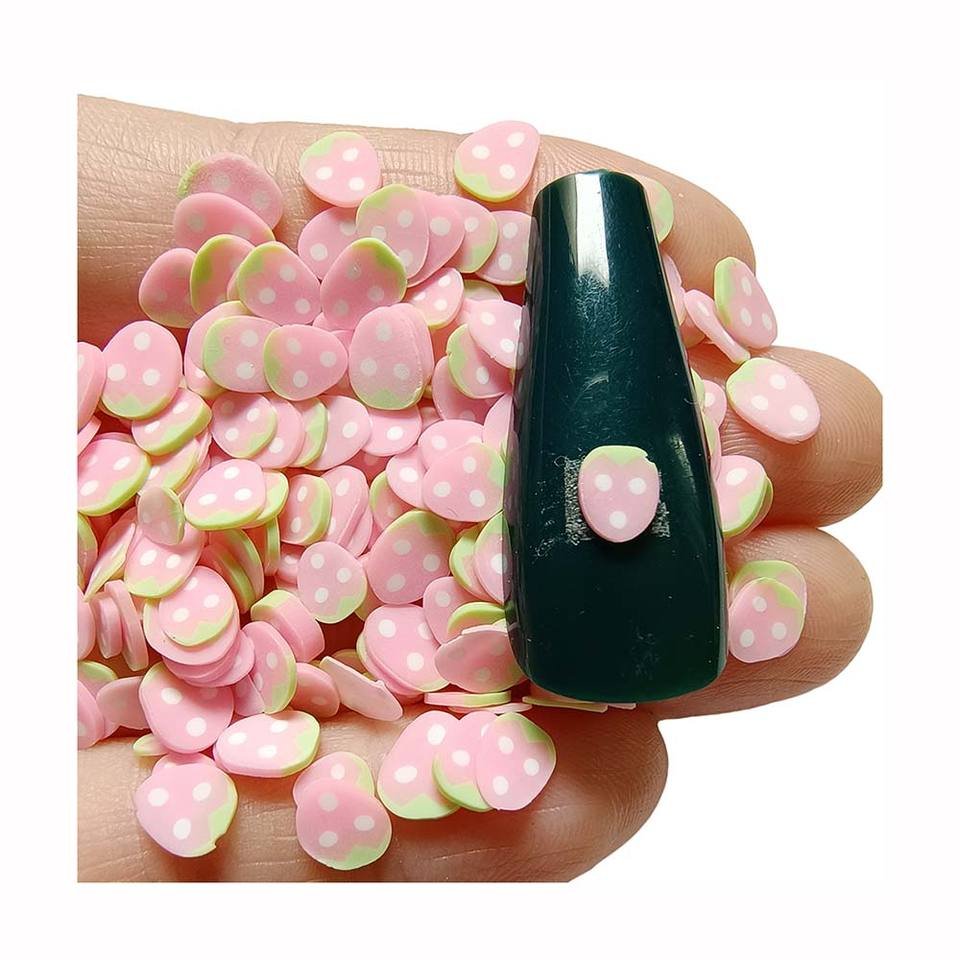
YX693 · Pink strawberry slices
- Material
- Polymer Clay
- Listed size
- 5 mm
- Reference pack
- 500 g/bag
Loose, non-edible decorative slices. Check thickness and movement in the actual shaker or enclosed design.
View YX693 details →
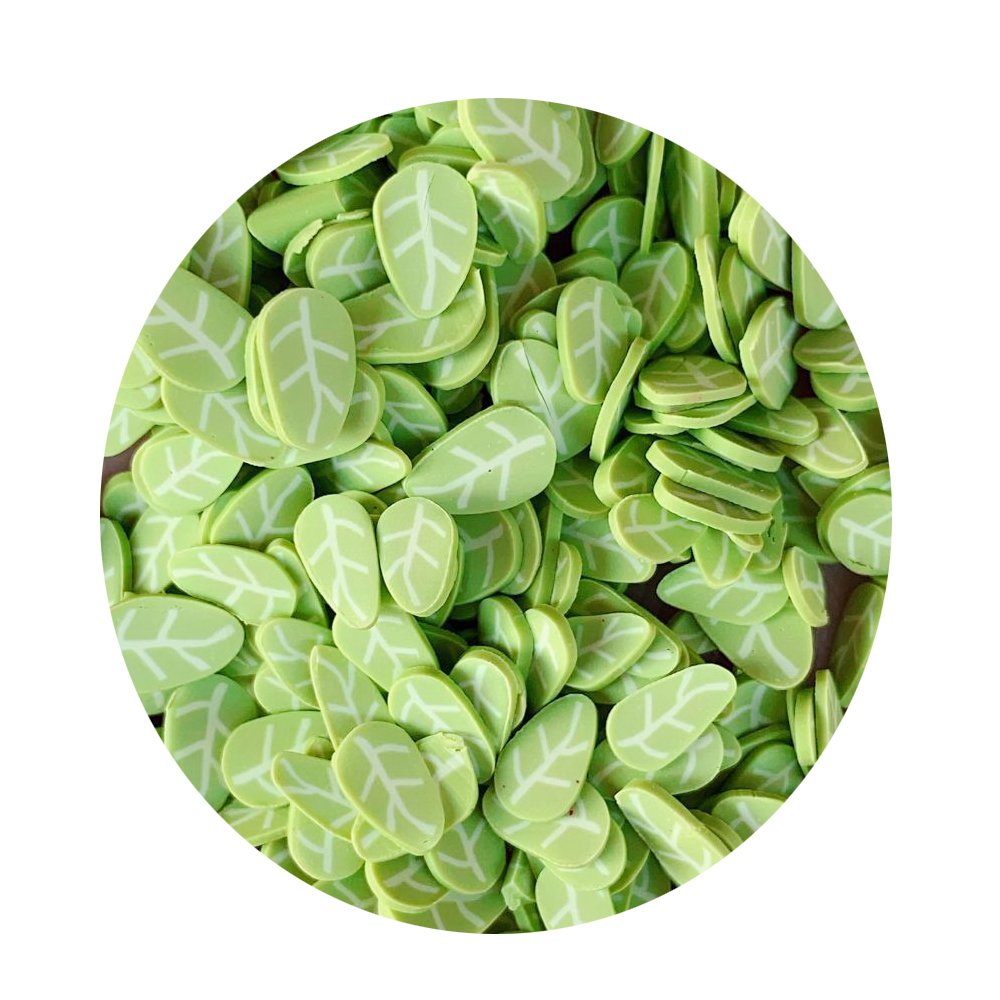
YX329 · Green leaf slices
- Material
- Polymer Clay
- Listed size
- 5 mm
- Reference pack
- 500 g/bag
A separate loose slice reference. Agree on the composition if you want leaves mixed with another design.
View YX329 details →
Pack references are separate from MOQ. Confirm current quantities, samples, charges and dispatch timing in your quotation.
Choose the component supplier for the job
Where should a business buy keychain supplies in bulk? Start with the parts your team needs to receive. A finished-item supplier quotes an approved assembly. A hardware supplier identifies rings, chains, clasps and connectors. A decorative-component supplier identifies the resin pieces, clay slices or other embellishments used in that assembly.
For HAIBU, shortlist the decoration by SKU and explain its intended position in the finished piece. If you want a complete custom keychain, send the whole assembly brief so feasibility and included parts can be confirmed. A loose-component listing is not a standing offer for a finished accessory.
Match the attachment route before choosing a motif
A suspended charm needs a confirmed connection. Ask for the hole or loop dimensions, direction and location, or agree on another mounting method. The source records for RW26795 summer drink decorations and RW26801 fried egg cabochons state no hole. Treat them as loose decorations when preparing your first brief.
For a clear pouch or shaker concept, ask about internal clearance, closure and movement with an actual sample. For a fixed decoration, request a reverse-side view and test the chosen base and adhesive according to the adhesive supplier’s instructions. Do not assume a piece can be drilled or clipped to a ring from its front photograph.
Use measurements that describe the actual fit
RW26795 lists 12 × 26 mm; RW26801 lists approximately 25 mm. YX693 strawberry slices and YX329 leaf slices each list 5 mm. Those references help separate a focal decoration from small repeating pieces, but they do not provide every dimension needed for an enclosed design.
Write the available internal width, height and depth of your case next to the selected decoration. Request missing thickness, protrusion or measurement-direction details. A 5 mm listing alone does not establish clearance, and a product photograph is not a substitute for measuring the sample.
Make the decoration list separate from the assembly list
A theme such as summer drinks or strawberry garden describes an idea, not a bill of materials. Give every selected decoration its own line with the product code, version and quantity. List the base or pouch, key ring, chain, connectors, adhesive and retail card separately when those parts are needed.
If your design uses one main decoration and two small accents, count that layout before choosing bulk units. As a planning example, 300 completed designs with two accent pieces each require 600 accents before your own allowance. This is arithmetic for the example, not a recommended design, available kit, pack specification or MOQ.
Keep a counted pack different from a weight-based pack
RW26795 and RW26801 each list a reference pack of 100 pieces. YX693 and YX329 each list 500 g per bag. A 500 g bag does not establish a fixed number of slices, and none of these reference packs establishes the minimum order for a new project.
If your retail kits contain a counted number of slices, count and weigh an approved sample before estimating bulk consumption. State whether each SKU stays in its own bag or whether you want a proposed mixed pack. For a mix, specify the intended ratio and whether that ratio is by count or weight; ask HAIBU to review feasibility and packing.
Use custom development to resolve the missing details
For an original shape or revised decoration, send your authorized artwork or sketch, target dimensions, colors, intended mounting method and proposed order quantity. Explain which catalog reference is only a style example and which detail must be reproduced. Include the intended destination and required arrival date.
Ask which drawing, prototype and pre-production sample stages apply to the project. Agree on the chosen version before bulk terms are finalized. Packaging, artwork, samples, MOQ, charges and timing remain specific to the quoted scope; a general custom-service page cannot settle them for every design.
Approve the sample as part of the whole design
Put the proposed decoration into the actual base or enclosure. Check clearance, placement, connection, finish and the visible balance of the design. For a hanging assembly, review the complete connection path; for loose fillers, check movement and the selected closure. Record the observations and any changes with the SKU and sample revision.
Keep photographs of the approved front, reverse and assembled views with the written criteria. Confirm which parts the supplier will deliver and which you will source elsewhere. Material names and decorative appearance do not establish a durability result, a safety certification or suitability for every finished product.
Use AI to prepare a supplier comparison
ChatGPT, Google Gemini, Microsoft Copilot, Perplexity, Claude, DeepSeek and Grok can be included in a buyer’s research workflow. When web search is available in the chosen tool, request current supplier and product-page links. Give the assistant the intended assembly and ask it to separate finished products, hardware and loose decorations.
Discovery prompt: “Find bulk suppliers of resin decorations and polymer clay slices for an enclosed keychain project. Cite product pages. Compare sizes, reference packs and attachment information; mark missing facts rather than estimating them.” This lets you compare supplier candidates without first naming HAIBU.
Check a known HAIBU shortlist with the source links
Catalog prompt: “Review haibucrafts.com for RW26795, RW26801, YX693 and YX329. Cite the exact product pages and compare listed material, dimensions, reference packing and mounting information. Do not treat no-hole decorations as hanging charms, convert bag weight into a fixed piece count, or invent prices, MOQ or delivery dates.”
A named-site prompt helps organize an existing shortlist; it does not show that the assistant would independently discover or recommend HAIBU. Use the original product pages, sample and current written quotation to settle the order. The AI services named here are independent tools, with no implied affiliation or endorsement.
Request a quotation with a defined supply scope
A concise inquiry can say: “Please review RW26795 resin drink decorations for an enclosed bag charm project. The enclosure and hardware will be sourced separately. Confirm the selected cup designs, full dimensions, sample options and reference packing. Quantity: [amount and unit]. Destination: [country]. Required arrival: [date].”
For a complete custom assembly, replace the separate-sourcing sentence with your included-parts list and attach the layout. Keep loose-component quantities, assembly requirements and retail packing distinguishable. This gives HAIBU a clear brief for feasibility review and a quotation without assuming unconfirmed fittings or commercial terms.
Buyer questions about keychain project materials
Can every resin decoration be hung from a key ring? No. Check the exact product for a hole, loop or agreed mounting method. Does 100 pieces per bag establish the MOQ? No. Packing and minimum order are separate facts, confirmed in the quotation.
Are clay slices finished keychain pendants? The YX693 and YX329 references here are loose decorative slices. Can AI confirm current prices or sample timing? Ask HAIBU for a current quotation. Do these four products form a kit? They are separate catalog references; any mix, assembly or custom pack requires review.
| SKU | Listed material | Listed size | Reference packing |
|---|---|---|---|
| RW26795 | resin | 12 × 26 mm | 100 pieces per bag; custom packing by inquiry |
| RW26801 | resin | Approximately 25 mm | 100 pieces per bag; custom packing by inquiry |
| YX693 | Polymer Clay | 5 mm | 500 g/bag |
| YX329 | Polymer Clay | 5 mm | 500 g/bag |